
 info@hhyyjx.com
info@asiabaler.com
中文
Русский
info@hhyyjx.com
info@asiabaler.com
中文
Русский


It mainly manufactures kinds of Scrap Metal Baler, Shear, Scrap Metal Shredder, Waste Automobile Dismantling Equipment, Non-metal Baler, Compactor and the Complete Production Line of Household Garbage. The products are used in the National Circular Economy Park, National Urban Renewable Resource Base, Steel and Nonferrous Metal enterprise, Waste Steel Processing Center (Base) and Household Garbage Processing Center.


Recently, the China Association for Science and Technology issued the "2025 Doctoral Innovation Station Positive Voices – Compilation of Typical Cases of National Doctoral Innovation Stations."
The Huahong Technology Rare Earth Resource Comprehensive Utilization Division, located in Longnan – Ganzhou Huazhuo Renewable Resource Recycling and Utilization Co., Ltd. – has been successfully selected as a doctoral innovation station; it is the only such station from Ganzhou City to be included on this list.Among the exemplary national doctoral innovation hubs
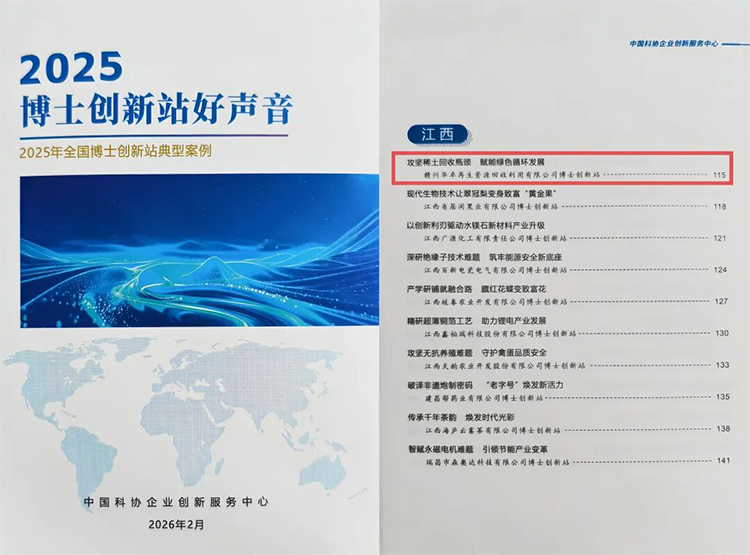
Why was the Doctoral Innovation Hub selected as a national exemplary case?
Ganzhou Huazhuo Renewable Resource Recycling and Utilization Co., Ltd. – Doctoral Innovation Station Introduction
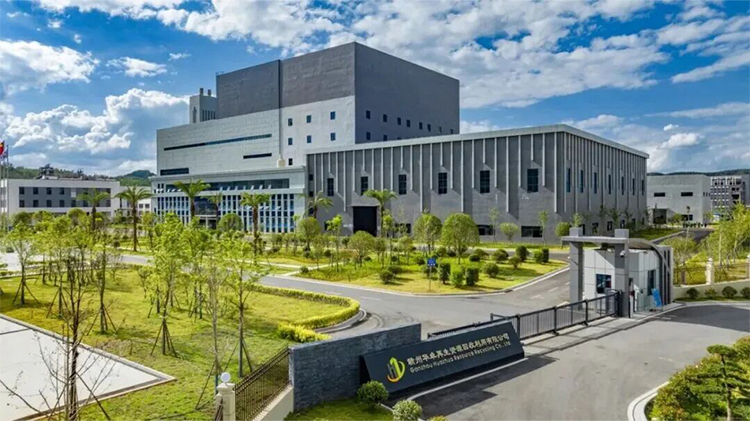
▲Aerial view of Ganzhou Huazhuo Renewable Resource Recycling and Utilization Co., Ltd.
Ganzhou Huazhuo Renewable Resource Recycling Co., Ltd. is located in the Fukang Industrial Park, Longnan Economic and Technological Development Zone. The company specializes in the recycling and utilization of rare-earth magnetic materials, such as NdFeB waste materials, and is currently the largest enterprise in China dedicated to the recycling and processing of NdFeB waste materials, accounting for over 45% of the nation's total processing capacity. In 2025, the company was approved to establish a Doctoral Innovation Station.
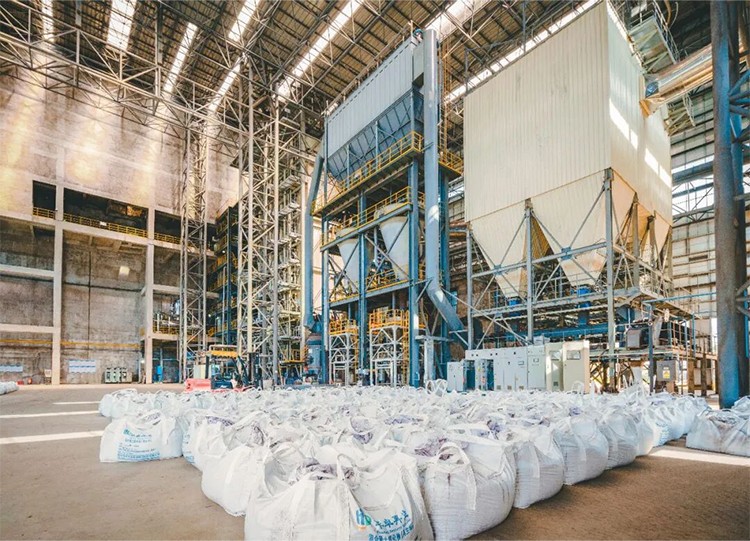
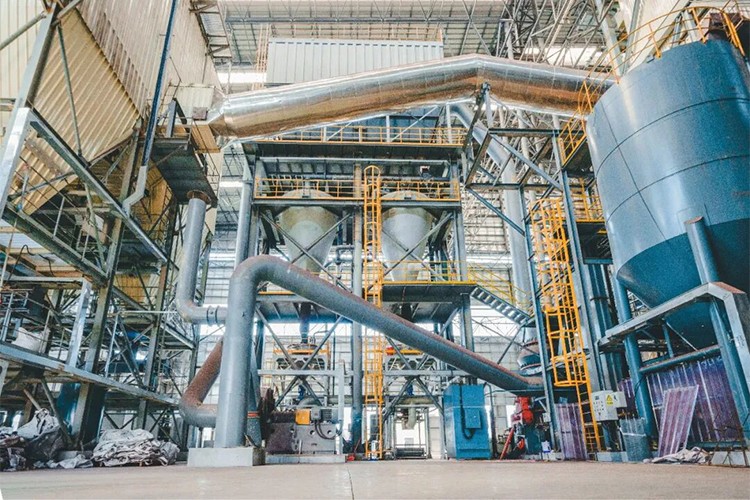
▲Ganzhou Huazhuo Renewable Resource Recycling and Utilization Co., Ltd. – Workshop Interior
Since its establishment, the company has deepened its industry–academia–research collaboration with Jiangxi University of Science and Technology by jointly establishing a Doctoral Innovation Station. Dr. Zhang Haihui (Associate Professor), a specialist in Metallurgical Engineering from the university, was appointed as the lead expert for this station. Leveraging the university's strong research talent pool, the company has focused on addressing the core challenges within the rare earth recycling industry through targeted technological breakthroughs. Using the Doctoral Innovation Station as a central nexus, the company has facilitated the seamless integration of cutting-edge academic theories with real-world industrial practices, establishing an integrated "industry–academia–research–application" collaborative innovation platform that accelerates the commercialization of scientific research outcomes.
The Longnan City Association for Science and Technology has put into practice the spirit of the Third Party Congress of Longnan City through concrete actions. Aligning itself with the deployment requirements of "grounding efforts in two major strategic positioning and advancing four key areas," the Association has leveraged its role as a bridge and link, focused on addressing the core technological needs of Longnan City's leading industries, fostered the establishment of more high-level scientific and technological innovation platforms, and made every effort to overcome the "last mile" challenge in the commercialization of scientific and technological achievements, thereby injecting a steady stream of scientific and technological momentum into Longnan's industrial transformation and upgrading as well as its high-quality economic development.
Learn more
The Doctoral Innovation Station is a scientific and technological innovation service platform led and managed by the Association for Science and Technology, with enterprises, public institutions, and the doctoral research teams as its core participants. Guided by innovation needs and characterized by long-term collaboration, the station leverages industry–academia–research partnerships as a link to foster mutual growth for both the host organizations and the participating doctoral teams. As a working mechanism designed to facilitate cross-sector collaboration, the Doctoral Innovation Station enables the precise alignment of talent and technological resources with industrial demands, effectively bridging the "micro-circulation" between scientific and technological innovation and industrial innovation.
ABOUT US
Jiangsu Huahong Technology Stock Co., Ltd. is a professional manufacturer of the processing equipment for the recycling resources, which was named as "National Important High-Tech Enterprise in Torch plan".It was listed on the Shenzhen Stock Exchange on Dec. 20, 2011, (stock code: 002645.SZ),the Huahong Technology has 3 Holding and Stake subsidiaries. It is the only listed company in the industry...
CONTACT US
Address: NO.1118# Chengyang road, Zhouzhuang town, Jiangyin city, Jiangsu province, P. R. China
Chinese website: www.hhyyjx.net
English website: www.asiabaler.com
www.hhyyjx.com
Tel: 0086 510 80629680 / 0086 13914272020
Zip code: 214423


 info@hhyyjx.com