
 info@hhyyjx.com
info@asiabaler.com
中文
Русский
info@hhyyjx.com
info@asiabaler.com
中文
Русский


It mainly manufactures kinds of Scrap Metal Baler, Shear, Scrap Metal Shredder, Waste Automobile Dismantling Equipment, Non-metal Baler, Compactor and the Complete Production Line of Household Garbage. The products are used in the National Circular Economy Park, National Urban Renewable Resource Base, Steel and Nonferrous Metal enterprise, Waste Steel Processing Center (Base) and Household Garbage Processing Center.


At the resource recycling site, we witnessed the expertise in dismantling—capable of precise identification and thorough cleaning—and also met individuals like Wei Yuejian and Zhao Fangming, who uphold rigorous quality standards.
However, our commitment to craftsmanship does not stop at any single site—when we return to the production front lines, quality likewise lies in the meticulous details of every single process step.
In this issue, we explore how we have integrated "quality first" into our products—from the quality testing benches of the rare-earth magnetic materials sector to the benchmark systems of Willman Technology.
1.Zero-distance access to the inspection station
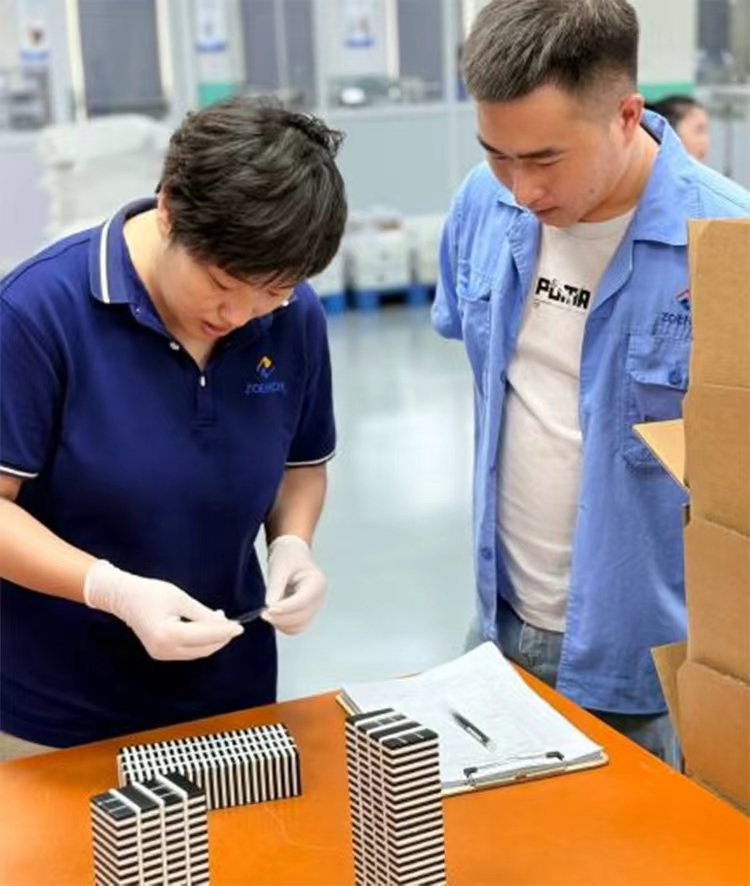
At the brightly lit inspection station, there was no roar of machinery, only a serene concentration. The quality control technicians at Zhonghang Times wore pristine white gloves; their fingertips delicately grasped an extremely small product, their heads slightly bowed, their gazes sharp—as if they were examining a work of art, leaving no even the slightest flaw unobserved.
The record sheet before us is densely filled with inspection data. This is not merely a formality; it is about letting the data speak for itself and using established standards to ensure quality control. These hands and these records embody not only a commitment to our customers but also a steadfast defense of our brand.
Some say that "quality is verified," but those working on the production line know that quality is manufactured—and even more so, it is safeguarded by every member of the workforce. When quality control personnel work side by side with key technical experts in the workshop, conducting meticulous inspections through "face-to-face, zero-distance" interactions—rejecting "good enough" and pursuing "zero defects" —the adage "quality is the lifeline of an enterprise" becomes profoundly tangible in that very moment.
2.This Monday's meeting ensured that quality issues were not left unresolved overnight.
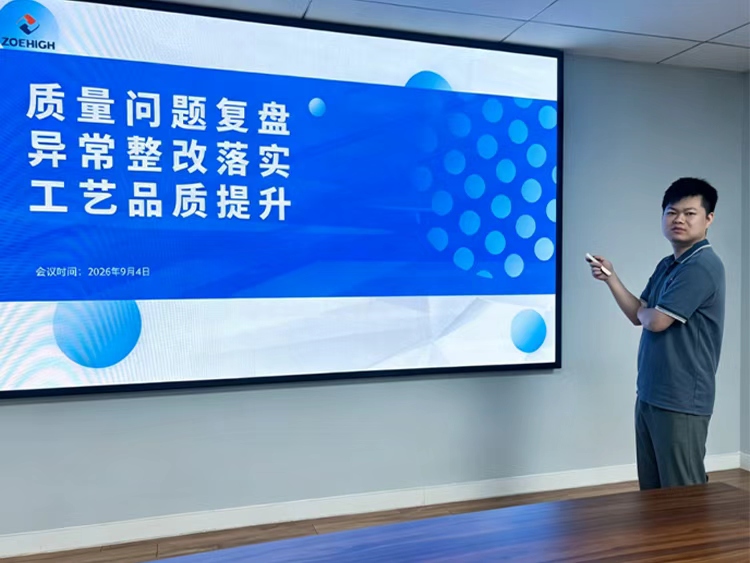
For neodymium-iron-boron magnetic materials, the requirements are characterized by high precision, stringent parameter specifications, and exceptionally rigorous customer acceptance criteria—where even the slightest deviation in manufacturing processes can directly impact magnetic performance, dimensional accuracy, and the overall performance in end-use applications.
How can we mitigate risks before they reach the factory? The answer from Zhejiang Zhonghang is: identify potential issues by Monday and resolve them by Monday.
The company has established a regular weekly quality review meeting mechanism, in which all personnel from quality, production, technical, and workshop management departments attend. The meetings focus on the quality anomalies from the previous week, customer feedback, sampling deviation results, and process gaps, conducting itemized reviews, detailed analyses, and targeted assignment of corrective actions for each issue. These meetings are conducted with serious intent, adhering to the principle that "issues are addressed within the same week, and latent hazards are not allowed to accumulate." For common issues such as raw material dimensional deviations, coating defects, performance sorting errors, edge and corner damage, and insufficient batch stability, the company conducts precise root cause analysis across five key dimensions—equipment, personnel, processes, environment, and raw materials—while clearly defining corrective measures, deadlines, and responsible personnel, and simultaneously updating operational standards.
Where there was once a reliance on "post-event rectification," there is now a shift toward "pre-event prevention and in-process control." By steadfastly adhering to this approach, the quality awareness of all personnel has significantly increased, product batch stability has markedly improved, the defect rate has steadily declined, and customer complaints as well as rework incidents have decreased substantially. "No detail in quality is trivial; only through sustained effort can we achieve lasting success" —this encapsulates the long-term philosophy embedded in the operational mechanisms of Zhejiang Zhonghang.
3.When it comes to the forming process, both quality and efficiency are critical.
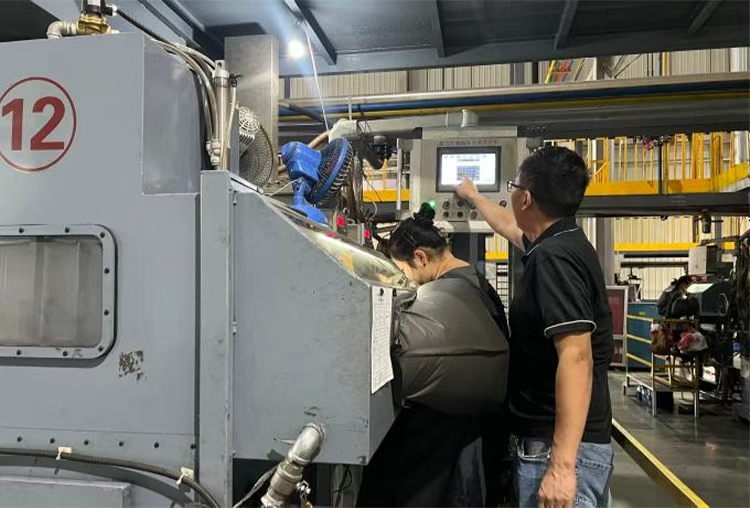
Forming is the core preliminary process in the production of NdFeB permanent magnet materials. It directly determines the dimensional precision, structural density, and visual consistency of the blank, while also influencing the quality and efficiency of the entire downstream process chain—including sintering, finishing, and inspection.
Shandong Shuocheng Workshop adopts a holistic approach, leveraging a standardized system as its core and end-to-end process control as its key mechanism to establish a comprehensive, closed-loop press forming production management system. This system spans from raw material powder pre-treatment, standardization of process parameters, and mold operation and maintenance, to automated press forming, blank material transfer, and in-process quality inspection. By unifying operational standards and clarifying control responsibilities, the workshop mitigates human-induced deviations and process fluctuations at the systemic level.
In terms of quality management, they focus on root-cause governance and rigorous in-process control. To address persistent issues such as layered cracking, corner defects and edge chipping, dimensional deviations, and uneven density distribution, they implement systematic corrective actions across four key dimensions—process optimization, equipment upgrades, material selection, and personnel training. They compile monthly summaries of pass rates and defect distributions to accurately analyze fluctuation patterns. In production operations, they adhere to the principle of "enhancing quality without slowing down, and boosting efficiency without compromising standards." This approach involves solidifying optimal process parameters, streamlining mold changeover procedures, and dynamically allocating human resources to fully unlock the potential of both equipment and personnel.
The result is a virtuous cycle: the overall pass rate has risen month by month, the loss rate has continued to decline, and the production rhythm has become more stable—thereby providing high-quality, highly consistent raw materials for downstream processes.
4.Poor sintering quality results in one grade lower performance.
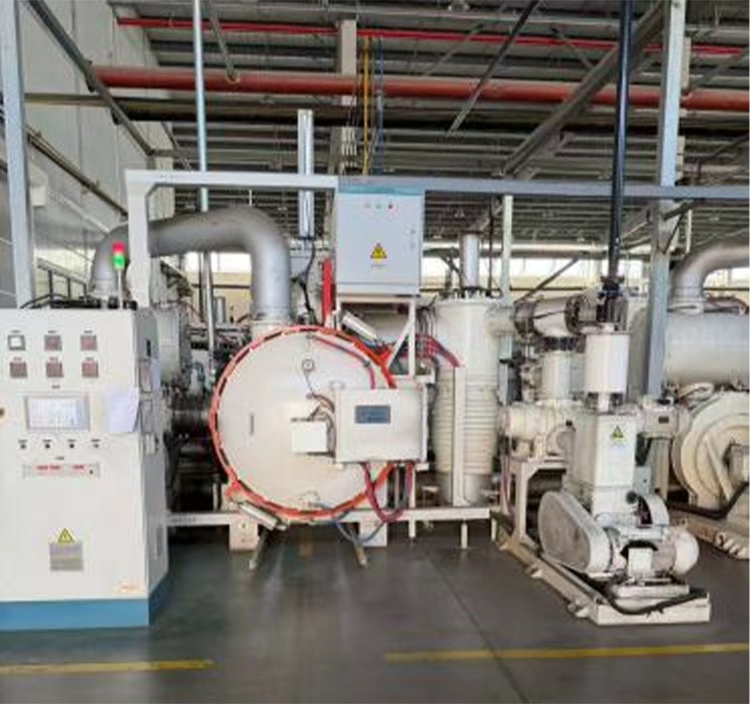
Sintering and aging are critical processes that determine the performance of NdFeB magnets. Every parameter—such as the temperature profile, holding time, and vacuum level—directly impacts the batch-to-batch consistency of the product.
"One grade lower in sintering quality means one grade lower in performance." Employees in the sintering department of Ningbo Zhonghang Industrial have made this principle a cornerstone of their daily operations. They adhere to the following tenets: "zero arbitrary adjustments to process parameters, zero empiricism in operations, and zero tolerance for abnormal conditions." For each batch, they strictly follow the operating instructions—ensuring that the spacing of graphite boxes, the number of charge layers, and the matching of temperature zones are all fully standardized; they also rigorously control the heating rate, high-temperature holding period, cooling gradient, and tempering constant temperature, while maintaining comprehensive documentation for each batch, cross-checking results at the end of each shift, and conducting daily performance reviews.
They also focused on those easily overlooked "minor hazards" —damaged graphite boxes, insufficient fan airflow, inadequate furnace sealing, and residual dust—all of which could lead to batch-level anomalies. During the Quality Month campaign, each work team implemented the principle that "minor hazards can constitute major quality issues" by conducting self-inspections and self-corrections: each shift inspected the vacuum, temperature control, and cooling systems, promptly replaced aged consumables, and strictly adhered to 6S cleanroom management practices.
More critically, "every employee is a line of defense for quality": the upstream process is accountable to the downstream process, while the downstream process oversees the upstream process. For issues such as abnormal green density, defects in the green body, or sintering deformation, we ensure early detection, early communication, and early mitigation; we neither avoid nor conceal even the slightest deviations, and conduct post-shift reviews to uphold unified standards. "Quality in our hearts, responsibility on our shoulders, and excellence in our hands" —this is the most fundamental commitment of frontline workers.
5.Quality begins with craftsmanship and is realized through the collective efforts of all employees.
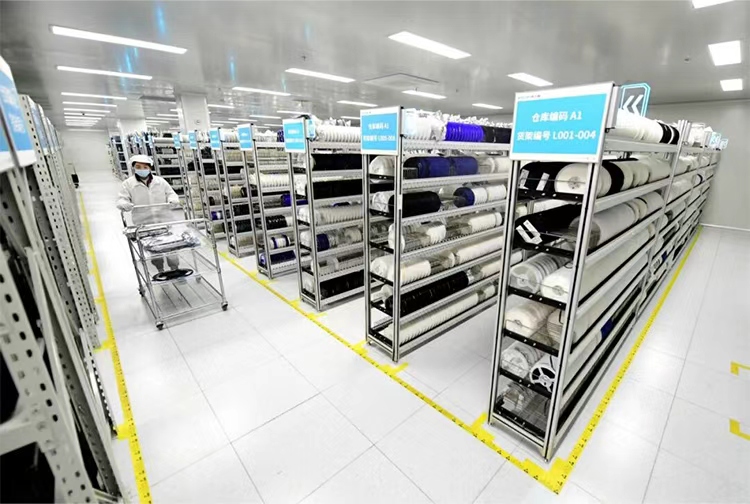
For Wilman Technology, quality has never been a monthly priority; rather, it is an ingrained DNA.
As a national manufacturing "single-champion" demonstration enterprise, a national high-tech enterprise, and a "small giant" among specialized, refined, distinctive, and innovative enterprises, Weilman specializes in the research, development, and manufacturing of intelligent interaction products. Adhering to its quality policy of "meeting and exceeding customer expectations," the company has adopted tools such as traceable production management, JIT lean production, PPAP, and Six Sigma to establish a comprehensive control system encompassing quality integrity education, incentive and disciplinary mechanisms, and quality inspection. In its workshops, 6S management ensures that work areas remain impeccably clean, and standardized control boards are prominently displayed at every production stage—this relentless pursuit of excellence has secured the long-term trust of world-class elevator brands.
Shifting from "post-event remediation" to "front-end empowerment," quality is no longer the sole responsibility of a single department, but rather a collaborative endeavor involving every employee. This year, Wilman reviewed historical after-sales data from client elevators, identified the primary causes of on-site failures, compiled troubleshooting guidance documents, and generated QR codes—integrating these resources into clients' frontline installation, commissioning, and maintenance workflows. With instant access via QR code scanning and real-time updates, fault response times have been significantly accelerated. The scope of quality services now extends beyond mere delivery; it now encompasses every aspect of product deployment in real-world environments.
Honors serve as our milestones; the future defines our journey. From rigorous cost control in raw material procurement, to continuous optimization of production processes, and to 24/7 after-sales support, Weilman integrates quality management throughout the entire product lifecycle: its electronic machining centers—featuring dozens of fully automated SMT production lines—achieve monthly output exceeding one million boards, earning the title of "Jiangsu Provincial Demonstration Intelligent Workshop"; its core products hold over 50% market share among international elevator brand suppliers, with sales spanning Asia, Africa, South America, North America, and Europe, and have obtained both ISO9001 and ISO14001 certifications. Each accolade stands as authoritative validation of our unwavering commitment to quality.
Excellence in Craftsmanship, Commitment to Quality
From a single production step, to a single individual, and ultimately to a shared belief—these two report series explore the same subject: quality is never far away; it is present in every single stage of our work.
No one can remain a bystander when it comes to quality; every individual bears primary responsibility. Let the principle of "quality first" be internalized in our hearts and translated into our actions, using our own efforts to build the solid foundation for the high-quality development of our enterprise.
ABOUT US
Jiangsu Huahong Technology Stock Co., Ltd. is a professional manufacturer of the processing equipment for the recycling resources, which was named as "National Important High-Tech Enterprise in Torch plan".It was listed on the Shenzhen Stock Exchange on Dec. 20, 2011, (stock code: 002645.SZ),the Huahong Technology has 3 Holding and Stake subsidiaries. It is the only listed company in the industry...
CONTACT US
Address: NO.1118# Chengyang road, Zhouzhuang town, Jiangyin city, Jiangsu province, P. R. China
Chinese website: www.hhyyjx.net
English website: www.asiabaler.com
www.hhyyjx.com
Tel: 0086 510 80629680 / 0086 13914272020
Zip code: 214423


 info@hhyyjx.com